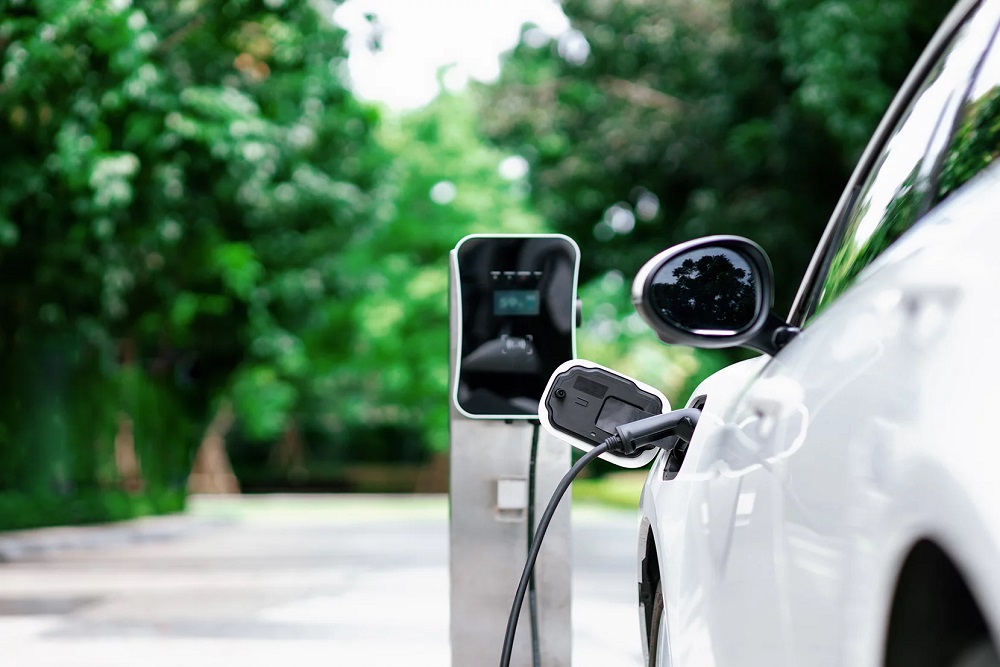
The global transportation sector is undergoing its most significant transformation since the invention of the assembly line. For over a century, internal combustion engine vehicles powered economic growth, reshaped cities, and provided unprecedented personal mobility. However, this progress came with a substantial environmental cost. Today, the automotive industry faces a complex challenge: meeting the global demand for mobility while drastically reducing its carbon footprint.
Driven by stringent government regulations, shifting consumer preferences, and groundbreaking technological advancements, the demand for sustainable automotive solutions has transitioned from a niche market segment into a structural industry reality. Automakers, component suppliers, and energy providers are rapidly realigning their business strategies to accommodate a future centered on decarbonization and resource efficiency.
The Regulatory Pressures Driving Fleet Transformation
Government policy remains the primary catalyst for automotive sustainability. Around the world, legislative bodies are implementing aggressive emissions targets that make the production of traditional fossil-fuel vehicles economically unviable over the long term.
In the United States, federal agencies continue to tighten corporate average fuel economy standards and greenhouse gas emissions limits for passenger cars and light trucks. State-level mandates, particularly California’s Advanced Clean Cars II regulation, require all new passenger cars, truck-based passenger vehicles, and light-duty trucks sold in the state to be zero-emission vehicles by 2035. More than a dozen other states have adopted similar paths, effectively forcing domestic and foreign automakers to commit hundreds of billions of dollars toward vehicle electrification.
On an international scale, the European Union has mandated a 100% reduction in carbon dioxide emissions for new cars and vans by 2035, establishing a definitive timeline for phasing out petroleum-powered engines. Concurrently, major urban areas worldwide are introducing low-emission zones that restrict or penalize the entry of older diesel and gasoline vehicles. These top-down mandates leave legacy automakers with a clear choice: innovate and adopt sustainable technologies or lose market access.
The Diversification of Powertrain Technologies
While the long-term vision for many manufacturers centers on battery electric vehicles, the current transition relies on a multi-pathway approach to electrification. Automakers recognize that infrastructure constraints, regional energy grid variations, and consumer readiness vary significantly across different markets.
Battery Electric Vehicles
Battery electric platforms represent the core of long-term sustainable mobility plans. Recent advancements in lithium-ion and lithium iron phosphate chemistry have significantly reduced production costs while increasing energy density and vehicle range. Furthermore, the development of solid-state batteries promises to eliminate driving range anxiety by offering faster charging times and superior thermal stability compared to conventional liquid-electrolyte cells.
Hybrid and Plug-In Hybrid Electric Vehicles
As battery electric platform adoption matures, hybrid systems have experienced a substantial resurgence in North America and other regions. Standard hybrids and plug-in hybrids combine internal combustion engines with electric motors, offering an immediate reduction in fuel consumption and tailpipe emissions without requiring drivers to rely entirely on public charging networks. This technology serves as an essential transitional bridge for consumers who lack access to dedicated residential or workplace charging stations.
Hydrogen Fuel Cell Technology
For heavy-duty commercial transport, long-haul trucking, and specialized municipal fleets, hydrogen fuel cells present a compelling alternative to heavy battery packs. Fuel cell electric vehicles utilize compressed hydrogen gas to generate electricity through an electrochemical process, emitting only water vapor as a byproduct. The superior energy density of hydrogen allows for rapid refueling times and payload capacities that match or exceed conventional diesel configurations.
Supply Chain Decarbonization and Net-Zero Manufacturing
True automotive sustainability extends far beyond eliminating tailpipe emissions. As operational emissions decrease through electrification, the environmental focus shifts toward the manufacturing process and supply chain management. Production operations, raw material extraction, and component logistics contribute heavily to a vehicle’s total lifetime carbon footprint.
To achieve genuine net-zero status, automotive corporations are demanding full transparency from their suppliers. This initiative involves tracking the carbon intensity of foundational raw materials, particularly steel, aluminum, and plastics. Industrial manufacturers are transitioning to green steel, which utilizes hydrogen rather than coking coal during the reduction process, and recycled aluminum to lower the initial carbon footprint of vehicle chassis and body panels.
Furthermore, automotive manufacturing plants are undergoing comprehensive energy overhauls. Companies are investing in on-site solar arrays, purchasing power from localized wind farms, and incorporating energy-efficient robotic automated systems on the assembly floor. Water conservation systems, closed-loop waste management, and zero-waste-to-landfill policies are becoming standard operating metrics across modern assembly facilities.
Embracing the Principles of the Circular Economy
The traditional linear economic model of extraction, production, use, and disposal is being replaced by a closed-loop, circular approach. In the automotive sector, circularity focuses on designing vehicles for longevity, easy disassembly, and high-yield material recovery at the end of their functional lifespan.
Advanced Automotive Remanufacturing
Automotive remanufacturing involves restoring used, worn-out vehicle components to original factory specifications. Unlike basic rebuilding or repairing, remanufactured parts undergo a rigorous industrial process where they are completely disassembled, cleaned, inspected, and updated with new components where necessary.
This practice offers profound environmental and economic advantages. Remanufacturing complex components, such as engines, transmissions, and electronic control modules, typically requires up to 80% less raw material and generates roughly 50% fewer carbon emissions compared to manufacturing brand-new replacement parts.
End-of-Life Battery Management
The rapid adoption of electric mobility has created an urgent need for sustainable battery recycling infrastructure. Traction battery packs contain valuable, geopolitically sensitive minerals, including lithium, cobalt, nickel, and manganese. Diverting these materials from landfills and keeping them inside the production loop is essential for long-term supply chain resilience.
The battery lifecycle is split into two primary phases:
-
Second-Life Applications: When an electric vehicle battery degrades to roughly 70% to 80% of its original capacity, it is no longer optimal for driving range. However, these packs retain substantial energy storage capability. Companies are repurposing these modules for static energy grid storage, where they store renewable energy from wind and solar installations for residential or commercial use.
-
Closed-Loop Recycling: Once a battery pack reaches the end of its useful second life, it enters specialized recycling facilities. Advanced hydrometallurgical processing methods allow recovery facilities to reclaim up to 95% of key battery minerals. These ultra-pure minerals are then funneled directly back into the battery manufacturing supply chain, reducing the environmental degradation associated with primary mining operations.
The Role of Software-Defined Vehicles in Eco-Efficiency
The convergence of automotive engineering and advanced software plays a pivotal role in optimizing vehicle efficiency. Modern sustainable transportation relies heavily on software-defined platforms that allow vehicles to receive continuous over-the-air updates to improve energy management over time.
Intelligent powertrain software continuously monitors battery temperature, driver behavior, and topographic data to optimize regenerative braking systems and power distribution. In hybrid vehicles, predictive energy management systems analyze GPS navigation routes to determine precisely when to deploy electric power and when to engage the internal combustion engine for maximum efficiency.
Furthermore, connected vehicle technology enables advanced fleet logistics and predictive maintenance. By utilizing artificial intelligence to analyze real-time sensor data, vehicles can alert drivers or fleet managers to mechanical inefficiencies, tire pressure drops, or aerodynamic issues before they escalate into major problems that increase energy consumption.
Infrastructure Expansion and Grid Integration
The widespread adoption of sustainable automotive solutions depends on the rapid scaling of public and private infrastructure. A robust, accessible charging network is vital to sustaining consumer confidence and enabling long-distance electric travel.
Energy providers and private networks are expanding direct-current fast-charging installations along major highway corridors and within urban centers. To ensure that electric mobility provides genuine environmental benefits, these stations are increasingly coupled with local renewable energy generation and battery storage buffers to alleviate peak demand on regional electrical grids.
Moreover, the integration of vehicle-to-grid technology is turning electric fleets into active assets for national energy infrastructure. Bidirectional charging capabilities allow parked electric vehicles to discharge electricity back into the power grid during periods of peak demand, balancing the grid and generating financial returns for vehicle owners while ensuring stability for localized energy distribution systems.
Frequently Asked Questions
What is the difference between a zero-emission vehicle and a carbon-neutral vehicle?
A zero-emission vehicle refers specifically to a vehicle that produces no tailpipe pollutants or greenhouse gases during its operational use, such as a battery electric or hydrogen fuel cell vehicle. A carbon-neutral vehicle takes the entire lifecycle into account, meaning that all greenhouse gas emissions produced during raw material extraction, manufacturing, vehicle transportation, usage, and eventual recycling are completely offset or eliminated through sustainable practices.
How do automakers verify that raw materials are sourced sustainably?
Automakers increasingly utilize digital supply chain tracking tools, including blockchain technology and digital material passports. These platforms record every step of a material’s journey, from the specific mine where minerals were extracted to the processing facility and final assembly plant, ensuring compliance with environmental standards and labor regulations.
Can alternative synthetic fuels make existing internal combustion engines sustainable?
Synthetic e-fuels, which are manufactured by capturing carbon dioxide directly from the atmosphere and combining it with hydrogen extracted from water using renewable energy, can theoretically make internal combustion engines nearly carbon-neutral. However, current production costs are high, and the overall energy efficiency of manufacturing e-fuels is significantly lower than directly charging a battery electric vehicle, keeping them limited to niche applications or high-performance sectors.
How does vehicle weight affect the sustainability of electric cars?
Electric vehicles require large, heavy battery packs, which increases overall vehicle mass compared to traditional cars. This extra weight requires manufacturers to utilize advanced, lightweight materials like carbon-fiber composites, high-strength steel, and structural aluminum to reduce chassis weight, which optimizes driving range and reduces wear on tires and suspension components.
What happens to the hazardous fluids inside traditional vehicles when they are recycled?
Automotive recycling facilities must follow strict environmental protocols to drain, isolate, and safely process hazardous automotive fluids, including engine oil, coolant, brake fluid, and refrigerants, before a vehicle is crushed or shredded. These recovered fluids are either re-refined into clean lubricants or chemically treated for safe environmental disposal.
How does extreme weather affect the efficiency of sustainable powertrains?
Extensive exposure to extreme cold or heat can temporarily reduce the efficiency of battery electric vehicles. Cold temperatures slow chemical reactions within lithium-ion cells and increase the energy required to heat the vehicle cabin, which reduces driving range, though advanced thermal management software and heat-pump technology help minimize these impacts.